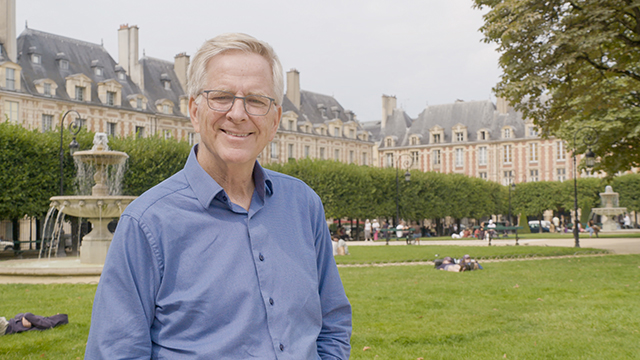
Join travel guru Rick Steves as he cruises the Seine, marvels at the stained-glass glory of Sainte-Chapelle, and takes a vibrant tour through Paris.
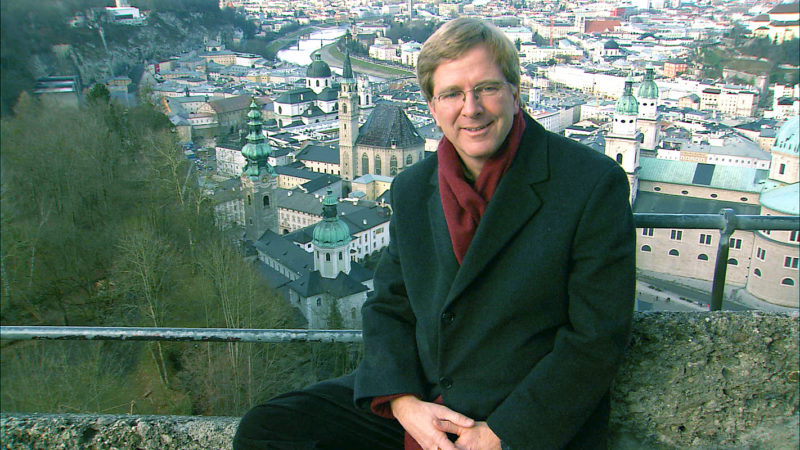
Host Rick Steves visits friends and families in England, France, Norway, Germany, Austria, Switzerland and Italy to learn about customs, hear local choirs and discover holiday family traditions.

Join Rick Steves and the Cincinnati Pops Orchestra on a spectacular musical journey through Europe.

In this entertaining, information-packed talk, join Rick Steves as he shares lessons from a lifetime of travel. With Europe as our classroom, we’ll learn the essential skills for smart travel from itinerary planning to venturing off the beaten path.
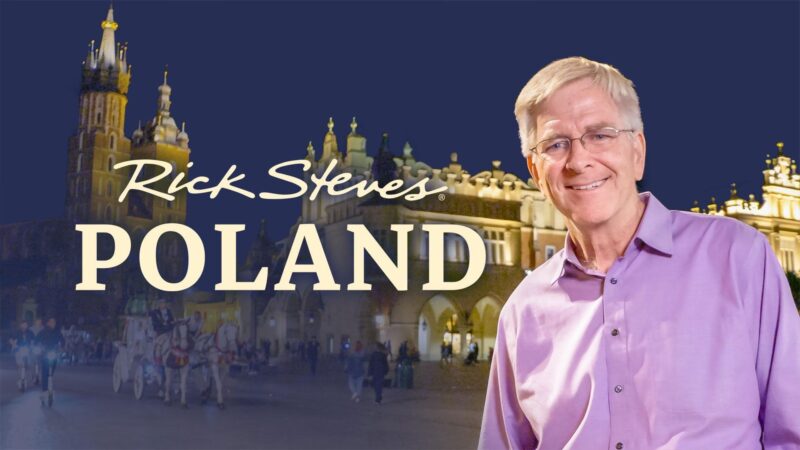
Join Rick Steves for a “best of Poland” special featuring Kraków, Warsaw, Gdańsk and more.

In the thin-air "thriller" special, join Rick Steves on an alpine adventure from Italy to Austria to Switzerland to France, with scenic train rides, breathtaking lifts, majestic glaciers, and unforgettable hikes.

Rick Steves Iceland has the trusty travel guide journeying to the North Atlantic nation…
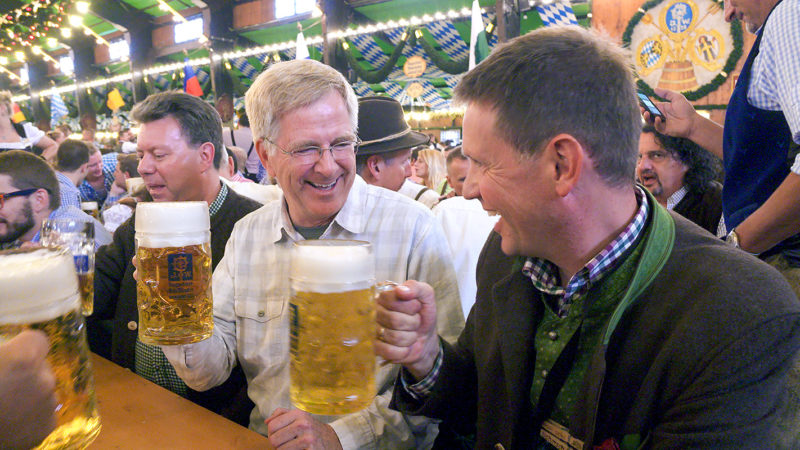
In this special, it’s party time in Europe. In addition to all its epic history and high culture…
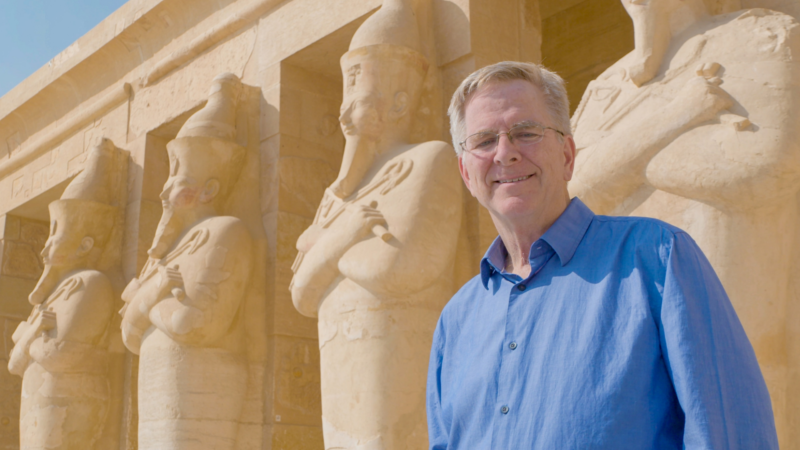
Travel expert Rick Steves sails beyond Europe for a one-hour special, Egypt: Yesterday and Today. Join Steves for an exploration of historic and cultural wonders, including the teeming metropolis of Cairo, the fabled city of Alexandria and the glories of the pharaohs in Luxor. He also brings viewers into a wonderland of back lanes and shops, meeting artisans, craft makers and vendors.
In the 1600s and 1700s, the art of "divine" kings and popes — and of revolutionaries and Reformers — tells the story of a Europe in transition. In the Catholic south, Baroque bubbled over with fanciful decoration and exuberant emotion. In the Protestant north, art was more sober and austere. And in France, the excesses of godlike kings gave way to revolution, Napoleon, and cerebral Neoclassicism.
18 results found (showing 1 - 10)