
PBS Hawaiʻi had a goal right from the start, says Mary Bitterman, station manager from 1974 to 1979. “Our commitment, in a way, was not to have programming for some people all the time, but having some programming for everyone.”
To that end, the station, at the time called Hawaii Educational Television Network or HETV, produced programs highlighting native Hawaiian culture, local food, music and sports. There were live forums with panelists discussing local issues and a show dedicated to senior citizens called Pau Hana Years.
Current programs include Nā Mele, Home is Here, HIKI NŌ on PBS Hawaiʻi and ʻONO! Hawaiʻi’s Food Culture on YouTube.
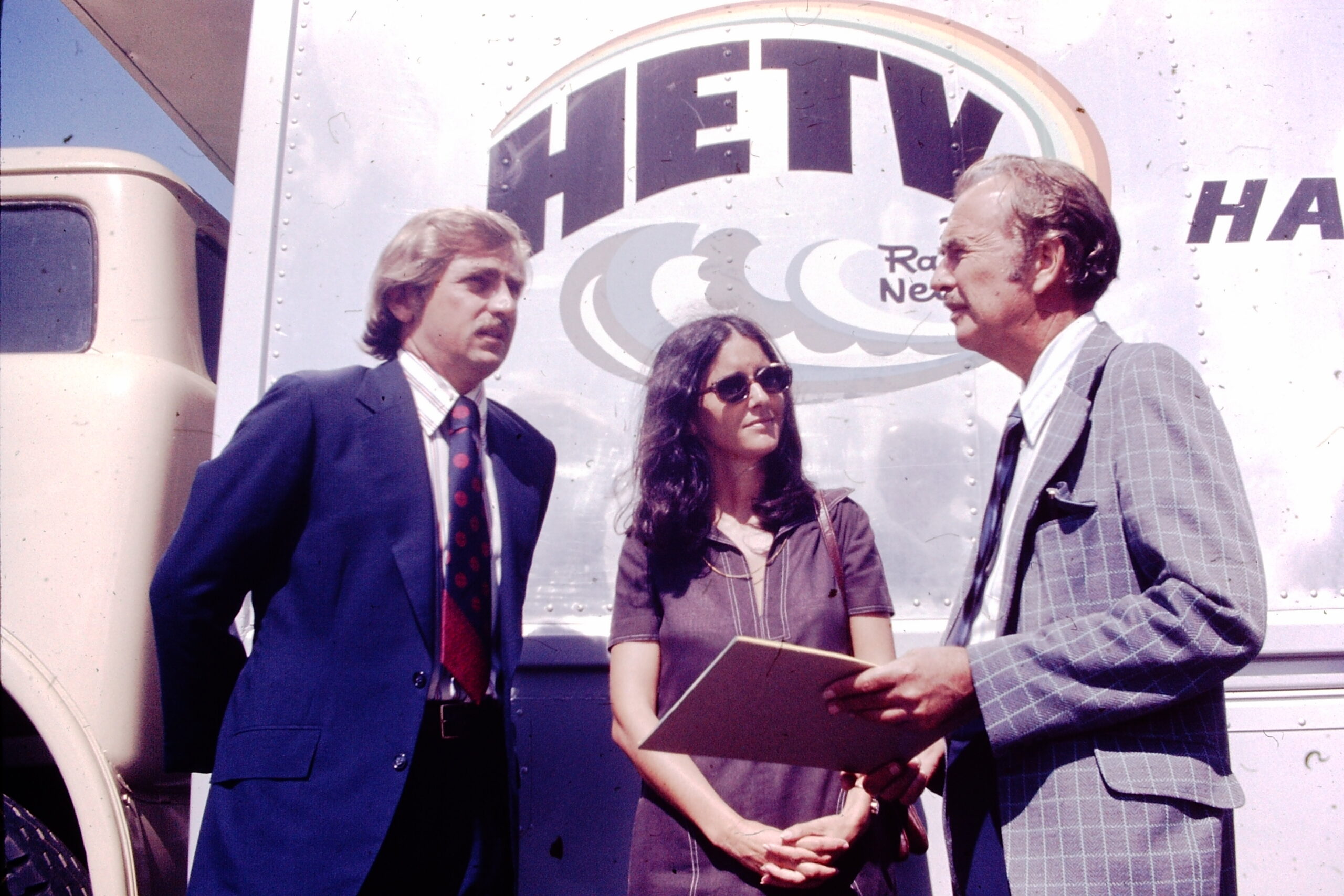
“Our commitment, in a way, was not to have programming for some people all the time, but having some programming for everyone.”
Mary Bitterman, Station manager from 1974 to 1979

Under Bitterman, the station produced programs like China Visit in 1977, sharing what China was like in the 1970s. The station also produced Damien, starring local actor Terence Knapp, about Damien de Veuster, the Belgian priest who helped Hansen’s Disease patients at Kalaupapa, Molokaʻi. The show went national and won a coveted Peabody Award.
This month marks 60 years of telling Hawaiʻi’s stories and the start of a year-long commemoration of that milestone. HETV broadcast its first programs from the University of Hawaiʻi at Mānoa Lab School campus on April 15, 1966.
In 1970, the station joined the Public Broadcasting Service, PBS. To this day, thousands of children watch and learn from Sesame Street and other educational shows on TV and online while adults tune in for favorites like NOVA, Nature, FRONTLINE and Masterpiece classics like Downton Abbey and All Creatures Great and Small.
As part of its commitment to education, PBS Hawaiʻi hires part-time student employees to teach them TV production skills. Local director/producer Michael C. Harris got hooked when he started at KHET in 1980.
“There was a camera up on a platform. Guys were going up on these ladders and the control room. And I was like, This is so cool. I’ve got to work in television, and it stayed with me ever since. 40 plus years later.”
Joy Chong-Stannard is a longtime director, producer and filmmaker who started in 1976.
“I was a student technician, and when I got into directing, we worked on a program called Dialog, which is the precursor to Insights on PBS Hawaiʻi, and it was a live show, one of the only live shows where people could call in and send in their questions to the panel.”
“And what’s important about Insights is that it provides an hour long perspective that is not provided anywhere else in Hawaiʻi.”
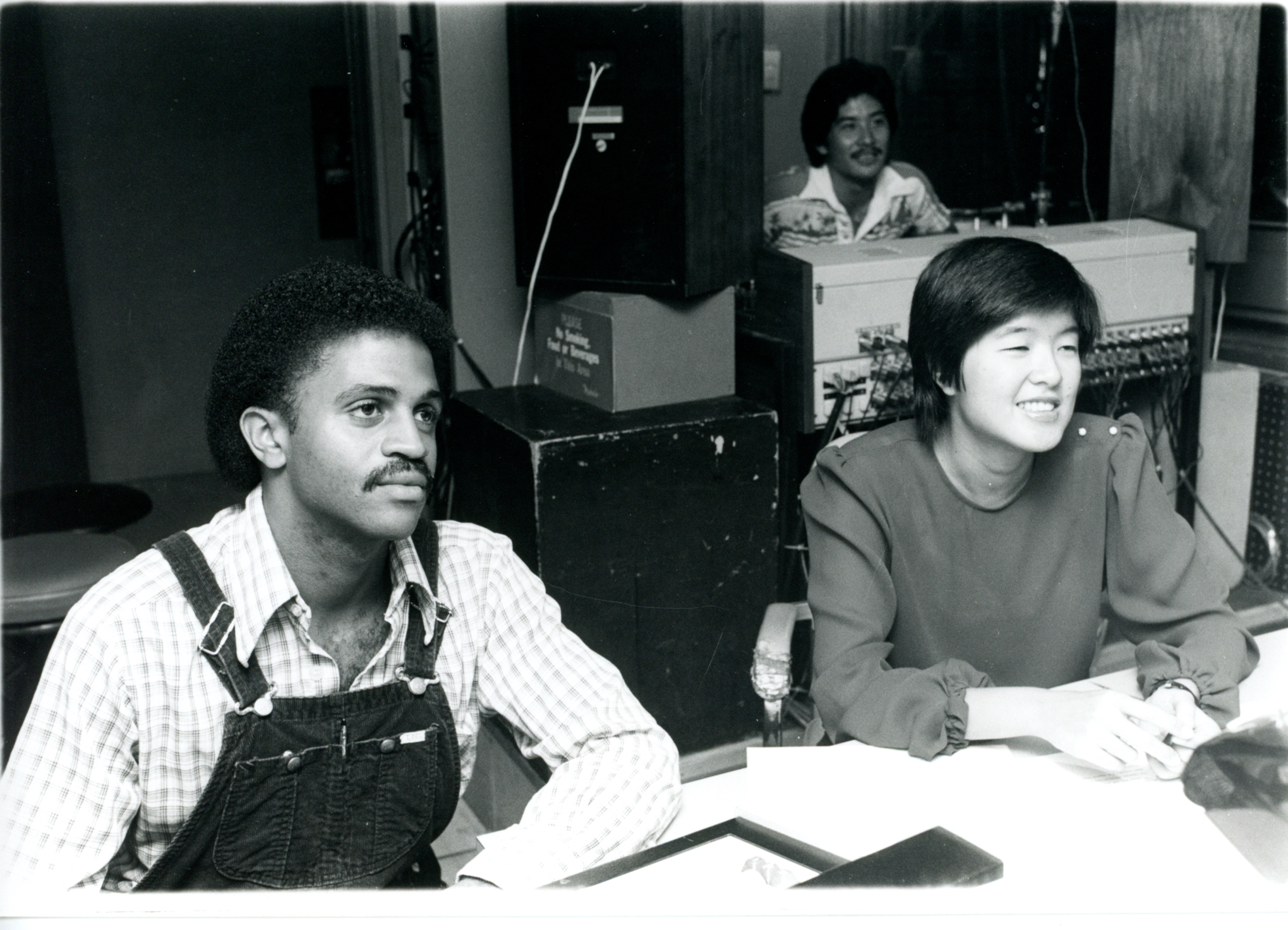
“I’ve got to work in television, and it stayed with me ever since.”
Michael C. HarrisMichael C. Harris and Joy Chong-Stannard working at PBS Hawaiʻi in 1982
Bitterman adds, “I think what’s really important about the continuing attraction of PBS Hawaiʻi is that we have so many stories to be shared, and we’re never going to run out of them.”
To read more about PBS Hawaiʻi’s history and see more photos from our archive, please go to pbshawaii.org/programs/60years/